Industrial drum scales measure drums, barrels, pails and related containers without requiring the material to be transferred to a separate weighing vessel. They can show the combined gross weight, subtract a known container tare and display the net weight of the material inside.
Facilities use drum scales for inventory control, filling, dispensing, formulation, shipping verification and process monitoring. The appropriate system depends on the maximum gross weight, required readability, container footprint, loading method, environment and any required data or automation functions.
What is an industrial drum scale used for?
A drum scale determines the gross weight of a loaded container, calculates the net weight of its contents after tare is applied and monitors weight gained or lost during filling and dispensing. The weight reading can also support inventory records, target-weight control, low-level alerts and process documentation.
Gross Weight, Tare Weight and Net Material Weight
A drum scale can provide several related measurements. Understanding the difference prevents container weight from being confused with the amount of usable material.
Gross weight = container + contents + any cart or fixture on the platform
Net material weight = gross weight − tare weight
- Gross weight is the complete weight applied to the platform.
- Tare weight is the known weight of the empty drum, cart or other container equipment that should be excluded.
- Net weight is the calculated weight of the material inside the drum.
The tare value can be captured from an empty container or entered as a known value. If different drum, cart or container types are used, the correct tare must be selected for each configuration.
For applications where a drum remains on the scale while material is consumed, the system can monitor the decrease in weight over time. This provides a practical way to estimate remaining material and determine how much has been dispensed.
Common Industrial Uses for Drum Scales
| Application | What the Scale Measures | How the Measurement Is Used | Relevant Options |
|---|---|---|---|
| Inventory monitoring | Net material remaining in the drum | Plan replenishment, reduce unexpected shortages and verify material use | Stored tare values, data logging and low-level alerts |
| Filling | Increasing gross or net weight | Stop or alert the process when a target weight is reached | Setpoints, relays, alarms and light towers |
| Dispensing | Weight removed from the drum | Track material consumption or control a dispensing operation | Setpoints, flow-rate functions and process outputs |
| Batching and formulation | Successive ingredient additions | Confirm that each ingredient reaches its required target | Tare functions, setpoints, relays and operator prompts |
| Shipping and receiving | Complete gross shipment weight | Verify incoming material or document outgoing drum weight | Printing, timestamped records and data export |
| Waste and material recovery | Material accumulated or removed | Track waste generation, reclaimed material or disposal quantities | Data logging, printing and network communication |
| Best overall fit | Processes that need to weigh a drum and its contents without transferring the material to another container. | ||
Inventory and Remaining-Contents Monitoring
Visual inspection is often an unreliable way to estimate the material remaining inside an opaque drum. A drum may also contain liquid, powder, granulated material or another substance that does not have a visible level.
If the empty-container tare is known, the scale can calculate the net quantity remaining. When the drum stays on the platform during use, operators can observe weight reduction directly or record it through a configured data system.
Alerts or setpoints can notify personnel when weight reaches a defined low level. The appropriate reorder point should account for normal consumption, delivery lead time and the amount of usable material required to keep the process operating.
Filling Drums to a Target Weight
During filling, the indicated weight increases as material enters the container. A setpoint controller can respond when a programmed target is reached. Depending on the configured equipment, the output may activate an alarm, light, relay, valve or other compatible control device.
The complete filling system must account for material flow after the stop signal, valve response time, hose contents and process dynamics. A scale can provide the weight signal, but the repeatability of the entire filling operation also depends on the connected equipment and control strategy.
Dispensing and Material-Use Tracking
A drum scale can also measure material leaving the container. The reduction in weight indicates how much has been dispensed, while the remaining net weight shows the available inventory.
This can support processes involving coatings, adhesives, lubricants, ingredients, cleaning materials and other products supplied from drums. Compatible flow-rate or data-logging functions may provide additional information when the application requires more than a local weight display.
Batching and Formulation in the Drum
Some operations add multiple ingredients directly to a drum. The scale can be tared between additions or used to monitor a sequence of target weights.
For example, an operator may place an empty drum on the scale, apply tare and add the first ingredient until its target is reached. After recording that addition, the process can continue with the next ingredient.
Whether this process is manual, assisted or automated depends on the indicator, setpoint system and external equipment. The required readability should be determined from the smallest ingredient addition and the permitted formulation tolerance, not only from the final batch weight.
Select Capacity and Platform Size for the Complete Load
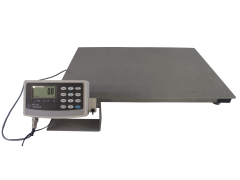
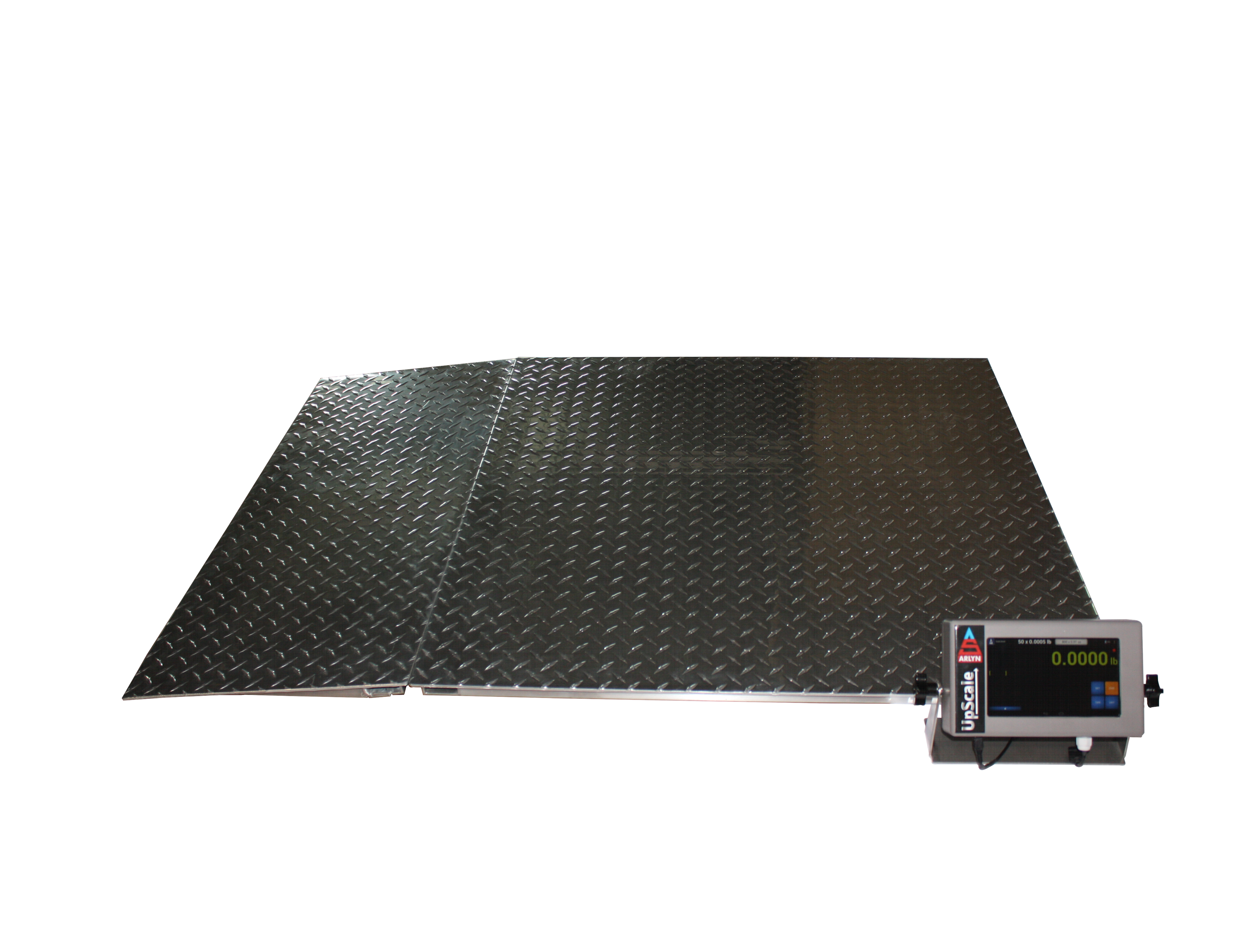
Arlyn Series 3250 drum scales are available in 500-pound and 1,000-pound capacities with 30-inch or 36-inch square platforms. Each standard platform is 1 7/8 inches high and includes a 15-inch-long loading ramp.
| Configuration | Capacity and Displayed Increment | Platform Choices | Best Suited For |
|---|---|---|---|
| 325D models | 500 lb × 0.1 lb | 30 × 30 in or 36 × 36 in | Gross loads below 500 pounds that benefit from 0.1-pound displayed increments |
| 325M models | 1,000 lb × 0.2 lb | 30 × 30 in or 36 × 36 in | Heavier drums, materials or carts with gross loads up to 1,000 pounds |
| Custom configuration | Application-specific capacity, platform or integration | Unusual containers, carts, capacities or production requirements | |
Capacity must include the drum, contents and any cart or fixture that remains on the platform. Platform size should be selected from the complete load footprint rather than the drum diameter alone.
For detailed space planning, see 55-Gallon Drum Scales That Save Floor Space.
Construction for the Operating Environment
Standard Series 3250 drum scales use an aluminum platform with four stainless steel load sensors positioned near the platform corners. Optional full stainless steel construction is available for more demanding environments.
The correct configuration depends on the material, concentration, exposure frequency and cleaning method:
- General indoor industrial use: A standard aluminum drum scale may be appropriate.
- Frequent moisture or corrosive exposure: Consider optional stainless steel construction and a suitable indicator enclosure.
- Aggressive chemicals: Evaluate a dedicated corrosion-resistant scale and confirm material compatibility.
- Classified hazardous locations: Use only equipment approved for the documented class, division or zone and material group.
Stainless steel construction does not automatically make the complete scale washdown-rated or intrinsically safe. Those requirements must be evaluated separately.
Data Collection and Process Integration
The standard MKE-5 indicator provides local weighing, tare and unit-conversion functions. The optional Arlyn UpScale touchscreen indicator can support guided operator workflows and compatible data or automation options.
Depending on the selected configuration, an industrial drum scale may support:
- USB or serial communication
- Ethernet or Wi-Fi connectivity
- Printing and barcode functions
- USB or network-based data logging
- Setpoints, relays, alarms and light towers
- Compatible PLC or industrial communication protocols
These options help move weight information into the required workflow. They do not change the inherent capacity, readability or accuracy of the weighing platform.
Define the drum-weighing task before selecting equipment.
Document the maximum gross weight, smallest required weight change, container and cart dimensions, loading method, environment and required output. Arlyn Scales can then help determine whether a standard Series 3250 model or a specialized configuration is appropriate.
Frequently Asked Questions
What is an industrial drum scale used for?
How does a drum scale determine the weight of the material inside?
Can a drum scale continuously monitor remaining material?
Should I choose a 500-pound or 1,000-pound drum scale?
Can a drum scale control filling or dispensing equipment?
Can a standard drum scale be used with corrosive or flammable chemicals?
Select a Drum Scale for the Industrial Process
A drum scale can do more than provide a single weight reading. When properly configured, it can help a facility monitor inventory, document material use, fill containers, dispense ingredients and integrate weight data with a broader production system.
The correct system begins with the mechanical requirements: gross capacity, displayed increment, platform size, loading method and environmental exposure. Indicator, data and automation options can then be added according to the workflow.